By Seema Joshi
Studies reveal that Vietnam is the only country among the Next Eleven (N-11) countries that has managed to maintain a growth comparable to that of China and India in the past five years. Though it is believed that the growth performance of Vietnam when compared with other economies in the region is the fastest, performing even better than Indonesia, Malaysia and India (Helen Qiao, Vietnam: the Next Asian Tiger in the Making?, 2008), there are still serious issues. What is stopping the Vietnamese economy from surging ahead?
Consider the following: Vietnam embarked on the path of liberalization by initiating Doi moi (renovation) in December 1986. The significant growth performance is noticeable from the average annual growth rates of GDP registered during the 1990s and the first nine years during of the next decade. The figures stood at 7.9 per cent (1990-2000) and 7.6 per cent (2000-2009) as per World Bank, World Development Indicators, 2011. However, the growth process in the Vietnamese economy slowed down in 2008 and 2009.
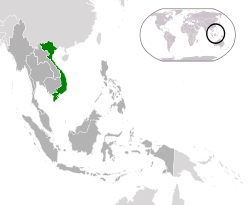
Vietnam
The economic growth registered over the past two decades has definitely led to a better performance of Vietnam’s economy on the social front too. The Human Development Report 2010 of UNDP had ranked Vietnam 113th out of 169 countries with an HDI value of value of 0.572. At this level, Vietnam’s position is higher than that of India (119), Pakistan (125) and Bangladesh (129). It is heartening to note that Vietnam has already attained 5 out of the 10 Millennium Development Goal targets.
The above facts and figures present a rosy picture of Vietnam’s socio-economic performance. However, there are several challenges which the economy will have to handle urgently. The first and foremost challenge at the present juncture is to combat inflation so as to ensure growth with stability in the economy. It was pointed out very clearly by the UN Country Team on 6 December 2011 in a Consultative Group Meeting (CGM) that, “With high inflation, ensuring macro-economic stability should indeed be a priority. So far, fiscal and monetary tightening has delivered initial results, but has also dampened GDP growth to 5.7 per cent in the first nine months of 2011. The present period of instability has persisted since November 2010, exposing Vietnam’s economy to a prolonged period of uncertainty.
Vietnam’s inflation rate, which stood at 18.62 per cent in the first 11 months of 2011, has been higher than any other ASEAN country for the past three years and is among the highest worldwide.” The obstacles on the path of development for a strong private sector need to be removed. The production structure needs to be upgraded from raw materials and labour intensive products to more advanced products. This in turn requires technology, knowledge and skills (Hakkala, 2007). Therefore, there is an urgent need in Vietnam to boost research and development expenditure which stood at just 0.19 per cent of GDP in 2000-2008.
The country will have to build its higher education system to align with the global economy. Vocational training and skill development require particular attention to ensure the employability of its educated people. The sustainability of growth depends on financial resources. Studies reveal that Vietnam has a fragile banking system with low financial deepening. There is an urgent need to reform the banking system and to develop the capital market.
Administrative reforms are also a must to make the government simple, monitored, accountable, responsive and transparent (i.e. ‘SMART’). Vietnam’s anti-corruption law was implemented in 2011. Vietnam has also made commitments in ratifying the UN Convention against Corruption (UNCAC). However, the pace of implementation is poor. The UN Team urged the government of Vietnam to focus on strengthening the roles and mandates of anti-corruption agencies, simplification of administrative procedures, cracking down on corruption and leakages, and greater participation of civil society organizations in development so as to improve accountability and transparency (CGM, 2011). Environmental protection measures, social security benefits and regulatory framework in various sectors need to be introduced at the earliest (Qiao, World Bank, 2008).
There is also a need for strengthening rural small and medium-sized enterprise (SME) development to make growth more inclusive. To make it a food secure nation measures need to be undertaken for increasing agricultural productivity at the provincial level, providing technical assistance and extension services to farmers, ensuring food safety and quality and also for making food affordable, accessible and available to all. Disparities in achievement noticeable between the Kinh majority and ethnic minority groups need to be reduced. In addition, waste management and green initiatives need to be put in place to make this human development sustainable and also to realize green growth.
From the foregoing, one can share the optimism of Qiao (2008): ‘Vietnam is the next Asian Tiger in the making’. However, there are several challenges (as mentioned above) which are arresting the development of the Vietnamese economy. There is a need to handle them through appropriate policies and reinforce the growth momentum of the past two decades. The potential of this economy will turn into actuality only when policies and programmes are accompanied by political commitment.
Seema Joshi
Visiting Professor, Indian Council for Cultural Relations (ICCR)


